

Artificial intelligence is already part of the routine of students, professionals and companies. Beyond answering questions, AI tools can assist with task organization, paper review, document analysis, project planning and exam preparation.
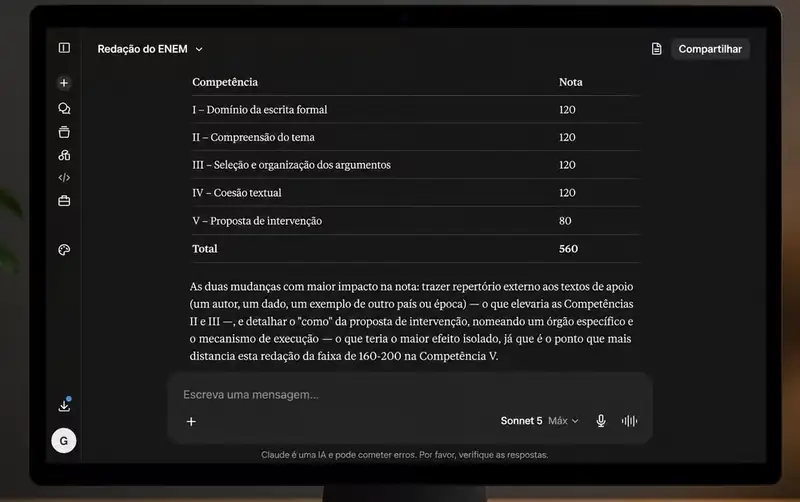
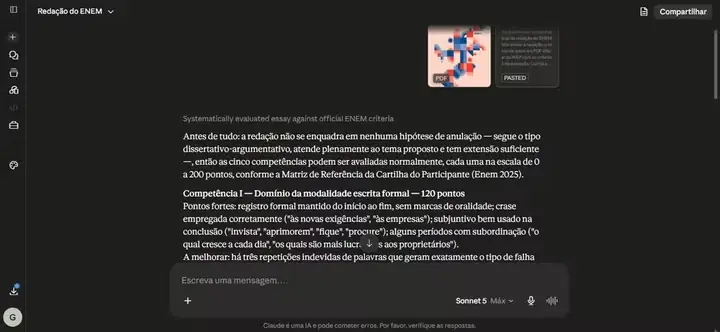
One example is using platforms such as Claude to review essays for Brazil’s National High School Exam, the Enem. Students can upload their text, provide the assessment criteria and request detailed feedback on grammar, structure, argumentation, clarity and the proposed intervention.
This use case shows that artificial intelligence can do more than generate content. It can identify weaknesses, suggest improvements and help users develop their own abilities.
AI can review texts and assignments
One of the most common uses of artificial intelligence is text review. It can identify spelling mistakes, agreement problems, repetition, confusing sentences and abrupt topic changes.
Users can also ask the tool to evaluate the structure of an essay, report or academic assignment. Rather than asking AI to rewrite everything, they can request an analysis divided into specific criteria.
Useful prompts include asking the tool to assess clarity, check whether arguments support the main idea, identify grammar mistakes without rewriting the text, or estimate an Enem score and explain each criterion.
Anthropic presents Claude as a tool that can provide writing feedback, support argument development and improve clarity. The company also highlights uses such as structuring assignments, reviewing drafts and preparing for assessments.
How to use AI to review an essay
To receive useful feedback, students should give the tool clear information and provide the complete essay.
They should then specify the desired assessment model. For the Enem, this means the five official competencies: command of formal Portuguese, understanding of the topic, organization of information and arguments, use of linguistic mechanisms and development of an intervention proposal.
After the assessment, students can ask which passages weaken the essay, which arguments need further development and how the conclusion could be improved.
The best approach is to use the feedback as guidance and rewrite the essay independently. In this way, artificial intelligence acts as a tutor rather than a tool that simply delivers a finished assignment.
Planning and organizing tasks
AI can also make routines easier to organize. Users may provide their schedules, commitments and priorities to generate a daily, weekly or monthly plan.
A student can request a review schedule based on subjects and available time. A professional can organize deadlines, divide a project into stages or prepare a meeting agenda.
Loose notes can be transformed into task lists, summaries, calendars and action plans. Deadlines, difficulty level, daily availability and the final goal make the result more personalized.
Summaries and content explanations
Artificial intelligence can simplify complex subjects, summarize long texts, explain concepts in accessible language or present content at different levels of depth.
Users can ask for beginner-friendly explanations, key-point summaries, review questions, practice tests or comparisons between concepts.
Anthropic research indicates that students frequently use Claude to create and improve educational content, edit texts, produce exercises and seek explanations about academic subjects.

Creating presentations, spreadsheets and documents
AI tools can support the production of professional materials by suggesting structures for presentations, reports, commercial proposals, spreadsheets and documents.
Claude can create and edit files in formats such as Word, Excel, PowerPoint and PDF, process spreadsheets, analyze data and generate visualizations.
Users may organize data into tables, build presentation outlines, turn meetings into minutes, produce reports from notes, compare documents, generate charts or create proposal and budget templates.
All materials should still be reviewed before use or distribution.
Support for professional routines
At work, artificial intelligence can reduce time spent on repetitive tasks such as emails, customer replies, scripts, reports, product descriptions, plans and internal documents.
Communication professionals can generate ideas and organize topics. Entrepreneurs can create service templates and proposals. Developers can request code explanations, identify errors and explore improvements.
AI can also serve as a brainstorming partner, offering starting points that professionals evaluate and develop through their own expertise.
The clearer the prompt, the better the result
Response quality depends directly on how the request is written. Generic prompts usually produce generic answers.
A strong prompt includes context, the objective, the desired format and task limitations. Instead of simply asking to improve a text, users can specify the audience, tone, information to preserve and maximum length.
Providing examples and allowing the AI to ask questions before starting can also improve precision. Anthropic documentation recommends clear instructions, context and examples.
Artificial intelligence can also make mistakes
AI should not be treated as an infallible source. Tools may provide incorrect information, misunderstand a request, invent data or suggest references that do not exist.
Academic, legal, medical, financial and professional content must be checked against reliable sources.
Students should not submit fully AI-generated work as their own. This undermines learning and may violate institutional rules.
The most productive use is to support thinking, review, structure and learning while keeping the user responsible for the final content.
AI should be an assistant, not a replacement
Artificial intelligence can save time and make many activities easier, but its best results involve human participation throughout the process.
Users can ask for explanations, point out problems, request revisions and compare versions instead of accepting the first answer.
As these tools become more common in study, work and personal organization, asking good questions, checking answers and using technology responsibly will become increasingly important skills.