
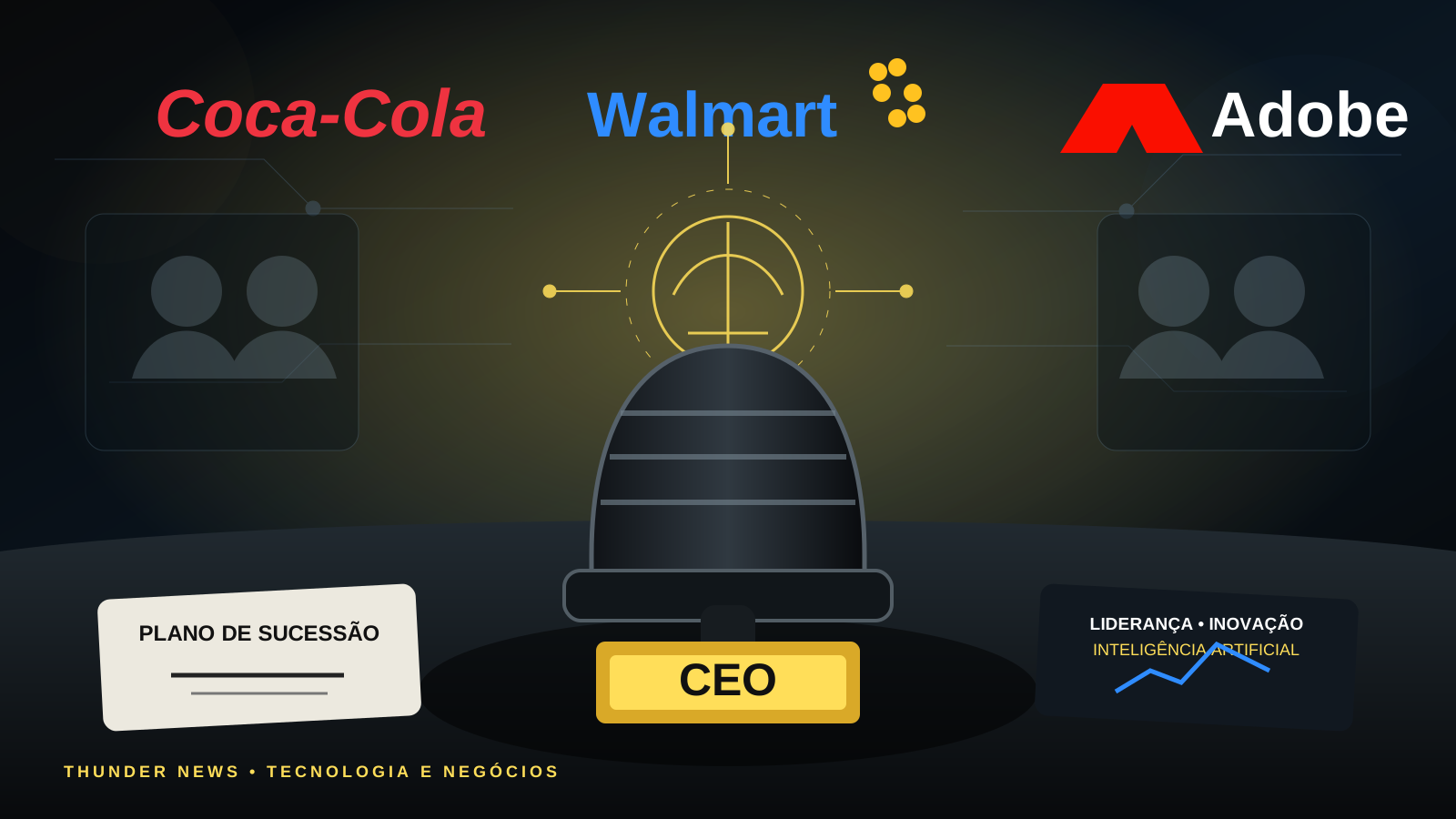
Artificial intelligence has moved beyond being an innovation tool to become a strategic factor in the future of the world’s largest companies. At organizations such as Coca-Cola, Walmart and Adobe, the technology is already influencing CEO succession plans and reshaping the profile expected from corporate leaders.
Future executives must do more than understand technology. They need to transform business models, accelerate innovation and place artificial intelligence at the center of growth strategies.
Coca-Cola prepares for a new phase of digital transformation
Coca-Cola has approached its succession process with a focus on maintaining the company’s technological transformation. The next phase requires leadership capable of applying AI to operations, consumer relationships and strategic decision-making.
The expectation is that the next CEO will strengthen digital initiatives and expand the use of technologies that make the company more efficient and competitive in a constantly evolving market.
Walmart accelerates investment in artificial intelligence
At Walmart, artificial intelligence also holds a central position in the long-term strategy. The retailer has expanded investment in automation, data analysis and solutions designed to make shopping more personalized.
Beyond internal efficiency, the company is investing in agentic commerce, where AI-based systems take part in decisions and interactions throughout the consumer journey.
Adobe faces a new era of digital creativity
Adobe is navigating a decisive moment as generative AI tools advance. The company is working to protect its leadership in creative software while facing an increasingly competitive market.
The choice of its next CEO is therefore expected to consider not only executive experience, but also the ability to lead in an environment where AI innovation has become a major competitive advantage.
The profile of corporate leaders is changing
Artificial intelligence is no longer merely a desirable executive skill. It is becoming a requirement for anyone expected to lead a major organization.
The new generation of CEOs must combine strategic vision, technological understanding and the ability to drive cultural change, using AI to increase productivity, create products and develop more efficient business models.
This movement is expected to intensify, making artificial intelligence one of the main factors considered when global companies select their future leaders.